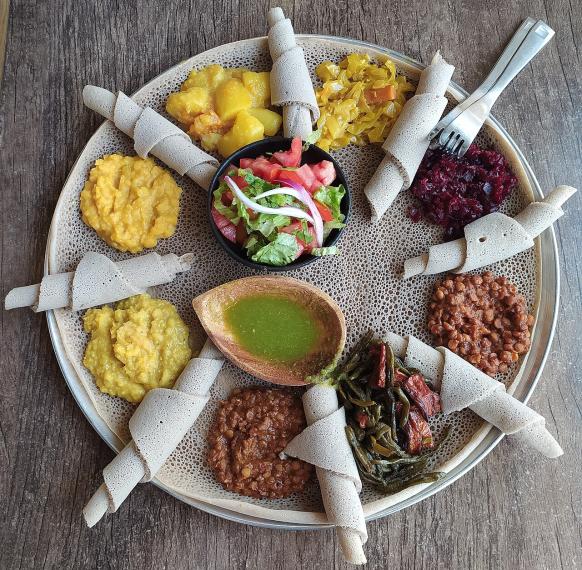
Ethiopian food is more than a meal; it is a communal ritual. Shared from a single large platter, the cuisine is defined by complex spices, slow-simmered stews, and the iconic sourdough flatbread that serves as both plate and utensil.
1. The Foundation: Injera
Before you try the stews, you must understand Injera. This fermented, pancake-like flatbread is made from Teff, a tiny ancient grain native to the Ethiopian highlands. Its slightly sour taste is designed to perfectly balance the rich, spicy flavors of the toppings.
2. The National Masterpiece: Doro Wat
Often called the "Queen of Ethiopian stews," Doro Wat is a spicy chicken stew traditionally served during holidays and special occasions. It is slow-cooked for hours with onions, boiled eggs, and a heavy dose of Berbere—Ethiopia’s signature spice blend of chili peppers, garlic, ginger, and basil.
3. For the Meat Lovers: Tibs
If you prefer something sautéed rather than stewed, Tibs is the answer. It consists of sliced beef or lamb stir-fried with butter (Niter Kibbeh), onions, garlic, and rosemary. It can be served "sizzling" in a clay pot or mixed with spicy peppers.
4. The Vegetarian Feast: Bayenetu
Ethiopia has a long tradition of "fasting days" (Wednesdays and Fridays), where no animal products are consumed. This has led to the Bayenetu, a colorful rainbow of vegan scoops served on Injera. It usually includes:
Misir Wat: Spicy red lentil stew.
Gomen: Collard greens sautéed with garlic.
Kik Alicha: A mild, yellow split-pea turmeric stew.
Shira: A smooth, savory chickpea flour puree.
5. The Breakfast Essential: Fir-Fir
Injera Fir-Fir is the ultimate traveler's breakfast. It is made from shredded pieces of Injera soaked in a spicy tomato and berbere sauce. It’s hearty, tangy, and provides the energy needed for a day of trekking or church-visiting.
The Grand Finale: The Coffee Ceremony (Buna)
You haven't truly finished an Ethiopian meal until the Buna ceremony begins. Coffee was discovered in Ethiopia, and the preparation is a sacred ritual.
The Scent: Frankincense is burned while the beans are roasted over charcoal.
The Brew: The coffee is served in small cups (Cini) alongside popcorn or roasted barley (Kolo).
The Rule: Traditionally, three rounds are served: Abol (the first), Tona (the second), and Bereka (the third/blessing).